Battle Gaming SVG Cut Files for Crafters and Digital Designers
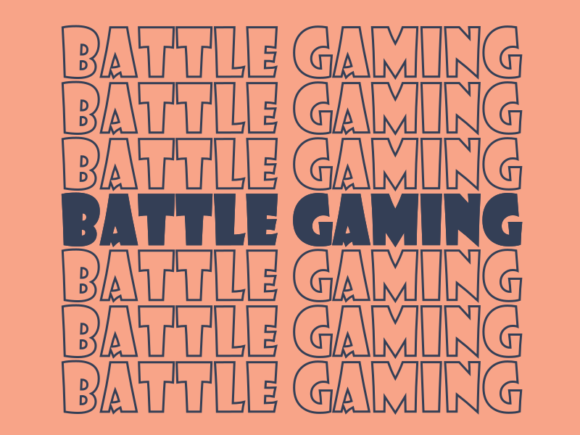
For anyone involved in digital crafting, graphic design, or custom merchandise, the term "cut file" is a familiar one. However, the specific format and its capabilities are often the deciding factor in a project's success. A Battle Gaming SVG Cut File represents a specialized resource within this broader category. It is, fundamentally, a scalable vector graphic file designed with themes and imagery associated with competitive gaming, esports, fantasy battles, or related genres. What defines it is not just the subject matter, but its technical foundation as an SVG, which opens up a distinct set of possibilities compared to other common file formats like JPEG or PNG.
The Technical Advantage of Scalable Vector Graphics
The core distinction of any SVG cut file, including a Battle Gaming SVG Cut File, lies in its vector nature. Unlike raster images (JPEG, PNG) which are composed of a fixed grid of pixels, vector graphics are defined by mathematical paths, points, and curves. This technical difference has profound practical implications. When you enlarge a raster image, the software must guess and fill in new pixels, resulting in a blurred, pixelated appearance. A vector graphic, however, simply recalculates the math, allowing it to scale up or down infinitely without any reduction in clarity or quality.
This scalability is crucial for crafters. A single Battle Gaming SVG Cut File can be used to create a small, intricate sticker for a laptop and then, without any additional work, be scaled to become a large, crisp vinyl decal for a gaming room wall. The edge of a sword, the details of a character's armor, or the fine text of a gaming logo remain sharp at any size. This eliminates the need to source multiple files for different project dimensions and ensures professional-quality results across all outputs.
Versatility in Materials and Applications
The utility of a Battle Gaming SVG Cut File extends far beyond paper. Because the cutting path is defined by clean vector lines, digital cutting machines such as Silhouette or Cricut can interpret it precisely for a variety of materials. The design can be cut from vinyl for decals or window clings, etched onto leather for custom accessories, stitched onto felt or cotton for apparel or patches, or even used on wood or acrylic with the right machine settings. This material versatility means the same thematic design can be adapted across different mediums, allowing for cohesive branding for a gaming team or personalized décor across an entire space.
Furthermore, the format's ease of modification is a significant benefit. Colors within an SVG are typically not fixed. A Battle Gaming SVG Cut File with a default color scheme can be quickly altered within design software to match specific project palettes. You can change a red faction logo to blue, adjust highlights to complement a room's color scheme, or create monochrome versions for different applications. This flexibility contrasts with pre-colored raster images, where color changes are often complex and degrade quality.
Comparing Formats: When SVG Is the Right Choice
Understanding when to use an SVG cut file versus other formats is key to selecting the right resource. For projects requiring physical cutting, engraving, or stitching with a digital machine, SVG is almost always the preferred format. Its clean, layered paths provide the machine with unambiguous instructions. Alternative formats like DXF are also vector-based and compatible with cutters, but SVG often offers broader software support and easier web integration.
The tradeoff sometimes comes in software familiarity. Working with SVG files effectively usually requires some knowledge of vector-based design software like Inkscape, Adobe Illustrator, or even the tools within cutter software themselves. For someone who only needs a static, pre-sized image for digital use (like a website banner), a PNG might be simpler. However, for any project that involves fabrication, customization of size or color, or future reuse at different scales, the initial learning curve for SVG pays substantial long-term dividends.
Primary Use Cases and Project Ideas
The application of a Battle Gaming SVG Cut File spans both personal and professional realms. For individual crafters, it is a resource for creating custom merchandise: team jerseys, personalized gaming station décor, unique controller skins, or event-specific t-shirts. In educational or community settings, they can be used for classroom activities related to design or technology, for creating promotional materials for school gaming clubs, or for awards and recognition in competitive events.
For small businesses or content creators, these files become tools for branding and marketing. They can be used to produce consistent, scalable logos for streaming channels, create merchandise lines (like stickers, magnets, or patches), design promotional materials (flyers, posters, business cards), or enhance digital content (ebook graphics, video overlays). The ability to scale one design from a tiny social media icon to a large convention banner without quality loss streamlines branding efforts significantly.
Evaluating Fit: Is a Battle Gaming SVG File Right for Your Project?
Deciding whether a Battle Gaming SVG Cut File is the optimal choice involves evaluating your project's requirements against the format's strengths and limitations.
Its strengths are clear: infinite scalability, multi-material compatibility, and easy color customization. It is a durable, reusable asset. If your project involves physical cutting or engraving, requires the design to be used at multiple sizes, or needs color adjustments to fit different contexts, then an SVG file is likely the best foundation. It is particularly well-suited for projects where a gaming-themed visual needs to maintain a professional, crisp appearance across diverse outputs.
Limitations are more about context and tools. If you do not have access to a digital cutting machine or vector design software, the core benefits of the cut file cannot be utilized. In that case, a pre-rendered, raster image might be more immediately useful. Also, while the design itself is scalable, the complexity of some intricate Battle Gaming SVG files might challenge very basic cutting machines with limited precision; checking the file's detail level against your machine's capabilities is a prudent step.
Key Decision Factors for Crafters and Designers
When comparing options and resources, consider these practical factors:
- End-Use Material: Will you cut vinyl, paper, fabric, or other substrates? SVG is ideal for all.
- Size Range: Do you need the design at 1 inch and 30 inches? Scalability makes SVG essential.
- Customization Need: Must you change colors or slightly modify elements? SVG allows this easily.
- Tool Access: Do you have software to edit SVG and a machine to cut it? This is a prerequisite.
- Design Complexity: Does the Battle Gaming theme involve fine lines and small details? Ensure your machine can handle it.
If your needs align with the scalable, customizable, and multi-use profile, then investing in a quality Battle Gaming SVG Cut File provides a versatile asset that can serve numerous projects over time. If your need is for a single, static digital image with no fabrication planned, a simpler format may suffice. By assessing these parameters, you can make an informed choice that aligns your resource selection with your actual project goals and toolset, ensuring both efficiency and quality in your final creations.