Cute Cat Gaming Illustration: Your Digital Asset for Creative Projects
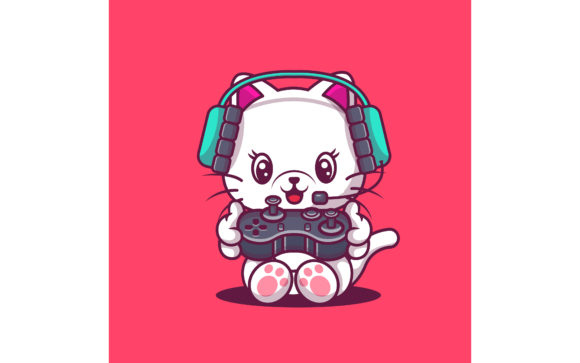
The intersection of gaming culture and adorable feline charm has become a powerful visual motif in digital design. A Cute Cat Gaming Illustration—a character often depicted with headphones, a controller, or amidst a pixelated backdrop—is more than just a whimsical image. It’s a versatile asset that can inject personality, relatability, and a touch of lightheartedness into a wide array of projects. From blog headers and social media campaigns to merchandise design and educational materials, this specific illustration style resonates with a broad audience, tapping into the universal appeal of cats and the widespread engagement with gaming.
However, sourcing and utilizing such an illustration effectively requires a mindful approach. Many creators, eager to add this engaging element to their work, overlook critical details that can undermine their project’s quality, professionalism, and cost-effectiveness. Let’s explore some common missteps and how to navigate them to ensure your Cute Cat Gaming Illustration serves your goals perfectly.
Choosing the Wrong File Format for Your Needs
A primary and often costly mistake is downloading or purchasing an illustration without understanding the implications of the available file formats. Typically, such assets are offered as an EPS file and a JPG file. Treating them as interchangeable leads to frustration.
The JPG file is a raster image. It’s a final, flat picture with a fixed resolution and size. If you need to enlarge it significantly for a poster, or shrink it for a small icon, the quality will degrade. The pixels stretch or compress, resulting in a blurry or pixelated appearance. Using a low-resolution JPG for a high-quality print job is a common error that directly affects the perceived value of your final product.
The EPS file, however, is usually a vector format. This is the powerhouse choice for scalability and editing. Vector graphics use mathematical paths, not pixels, allowing you to resize the Cute Cat Gaming Illustration to any dimension—from a tiny business card icon to a massive banner—without any loss of sharpness. Furthermore, if the EPS is a true vector file, you can often edit its components: change colors, separate elements, or adjust lines. This is invaluable for branding where you need to match specific color palettes.
The practical advice: Always download both files if offered. Use the high-resolution JPG for quick, fixed-size digital uses like website placements where resizing isn’t needed. Reserve the EPS file for any project requiring scaling, professional printing, or future customization. Before downloading, verify the seller’s description to confirm the EPS is indeed a vector file and not simply a packaged raster image.
Overlooking Licensing and Usage Rights
Another frequently misunderstood area is the license associated with the illustration. The excitement of finding a perfect Cute Cat Gaming Illustration can overshadow the necessary due diligence. “Free download” does not automatically mean “free for commercial use.”
Using an illustration in a logo, on sold merchandise, or in a client’s advertising campaign without explicit commercial rights can lead to legal issues. It affects your project’s legality and can force costly redesigns. Similarly, some licenses require attribution, meaning you must credit the artist wherever you use the image. For a sleek, professional brand presentation, having to place a credit line on every product or web page might not be ideal.
A better approach: Before any download or purchase, scrutinize the license terms. Look for keywords like “Commercial Use,” “Royalty-Free,” or “No Attribution Required.” If terms are unclear, contact the creator or platform for clarification. For projects intended for monetization, investing in a clearly licensed asset from a reputable marketplace is a safer and more efficient long-term choice than risking a free asset with ambiguous rights.
Ignoring Context and Audience Fit
While the illustration is universally cute, its specific style must align with your project’s tone. A common oversight is applying a hyper-stylized, neon-glowing gaming cat to a corporate wellness pamphlet, or using a very simplistic, cartoonish version for a serious esports team’s logo. The mismatch in aesthetic can confuse your audience and weaken your communication.
The illustration should enhance, not distract. For a children’s educational app about technology, a brightly colored, friendly cat with a simple controller works wonderfully. For a streamer’s merchandise targeting adult gamers, a more detailed, cool-toned cat with intricate headphone artwork might be appropriate.
What to check: Evaluate the illustration’s artistic details: line work, color saturation, complexity, and overall mood. Ask yourself if it complements your existing brand elements and speaks to your specific audience segment. Don’t let the general “cute” factor override the need for contextual suitability.
Failing to Plan for Technical Application
Professionals and beginners alike sometimes acquire the asset without a plan for implementation. You have the Cute Cat Gaming Illustration files, but then struggle to open or manipulate them.
EPS vector files require software like Adobe Illustrator, Affinity Designer, or free alternatives like Inkscape to properly access and edit. Expecting to fully edit it in a basic photo editor like Photoshop (which is primarily raster-based) or a word processor will limit your capabilities. This oversight affects efficiency and can lead to suboptimal results if you force a workflow that doesn’t suit the file type.
Practical correction: Before finalizing your decision, assess your own software toolkit and skills. If you need to customize the illustration, ensure you have, or can learn, a vector graphic program. If your needs are only for placing a static image, a high-quality JPG and a simple design tool may suffice. Many sellers also provide a transparent-background PNG file, which is incredibly useful for overlay on various backgrounds without needing complex editing—check if this is included.
Neglecting the Quality of the Core Design
In the search for a “cute cat,” the fundamental quality of the illustration itself can be overlooked. This includes the cleanliness of the line art, the balance of the composition, and the originality of the concept. A poorly drawn illustration, even if thematic, will lower the overall quality of your project.
Realistic example: Imagine using a Cute Cat Gaming Illustration where the cat’s posture is awkward, the controller details are muddled, or the colors are flat and unbalanced. When placed next to professionally designed competitors’ materials, your project will stand out for its amateurish asset, not its creativity.
Advice for evaluation: Look beyond the subject matter. Examine the technical artistry. Zoom in on the provided previews. Are the lines smooth? Is the shading coherent? Does the character have a dynamic, engaging pose? A high-quality base illustration gives you a robust foundation, whether you use it as-is or adapt it.
Final Considerations Before You Download
To make a decision that supports a successful outcome, take a moment to define your project requirements clearly. Determine your primary use: is it for web, print, or both? Establish if you need customization for branding. Confirm your legal rights for usage. Verify you have the technical means to handle the files effectively.
By approaching the Cute Cat Gaming Illustration with this strategic mindset, you move from simply adding a cute picture to intelligently integrating a versatile, professional-grade asset. This shift ensures the illustration becomes a true asset—enhancing your communication, satisfying your audience, and elevating the visual standard of your work without introducing unforeseen obstacles or compromises. The right illustration, used correctly, becomes a seamless and powerful part of your creative toolkit.